
Built For Busy Case Study
Built For Busy
A brand platform launch
Toast needed a brand position that could hold the weight of a $20B+ public company, a sprawling product portfolio, and a market that had collapsed into feature parity. This is how we got there.
My Role
Creative Direction, Brand Systems, Campaign Development
Launched
April 2026
Agency Partner
Arnold Worldwide
Week-one Reach
113M impressions
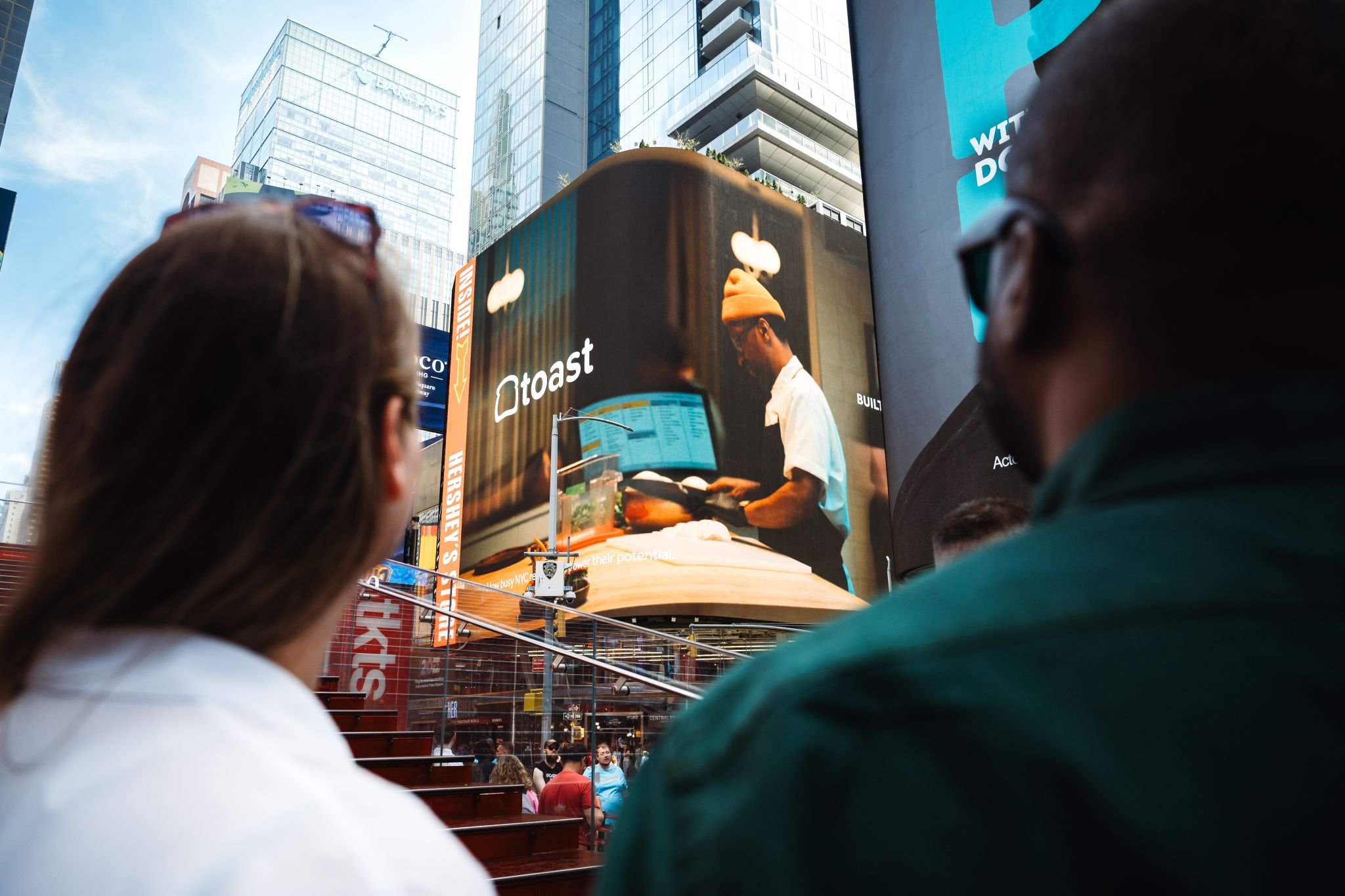
Times Square, April 16, 2026: Toast's first-ever Times Square placement, added value from the NYSE listing
The Situation
A market that had turned into a feature list
By 2025, every restaurant technology company was saying more or less the same thing. Present for you. Built for your team. Here when it matters. The category had settled into a kind of ambient warmth that felt safe and differentiated nobody.
Toast's prior platform, "Be There," had earned its place. It was the right message for a brand still establishing trust with operators. By 2025, Toast had crossed $1B in revenue, gone public, and was competing across restaurants, retail, and hospitality. At the same time, competitors in the category had started moving onto similar ground, trading on the same territory of presence and proximity. "Be There" had done its job. It just wasn't ownable anymore.
The answer wasn't to be louder. It was to be more specific. There's always one true thing about a company's best customers that no competitor can credibly claim. The work was finding it.
Brand strategy
Platform Dev
Creative direction
Campaign launch
Agency partnership
OOH activation
The Idea
Three words. One clear position.
The insight was sitting right there once you looked for it. Toast customers don't just want to be successful. They want to be busy. A packed dining room, a line out the door, 500 orders before noon. For these operators, busy isn't a stress response, it's the whole point.
Built For Busy is an unusual position for a B2B brand because it's a little bit exclusive. It's for operators who want demand and know how to handle it. Not everyone. That exclusivity was intentional. If you want to be built for busy, the platform is talking to you. If you're not there yet, it's telling you where you're headed.
Core products are built for volume. Guest products drive demand. Payroll removes friction when time is the thing you have least of. Every product had a role in the story, which is not something you can say about most brand platforms.
-
It defined the best customer without narrowing the ambition
A busy restaurant is the clearest possible signal of seriousness and scale. If Toast solves for the busiest operator, it solves for everyone. And if you're not busy yet, Toast helps you get there.
-
It hit a cultural nerve the category had missed
Normal people don't want busy. Toast customers do. Operators choose pressure, pace, and responsibility. Built For Busy positions Toast as the platform built for people who thrive where others tap out.
It was simple enough for the whole company to carry
At 5,000 employees, a platform that requires explanation doesn't survive. Built For Busy could be understood in a sentence, translated up and down the funnel, and activated across every channel.
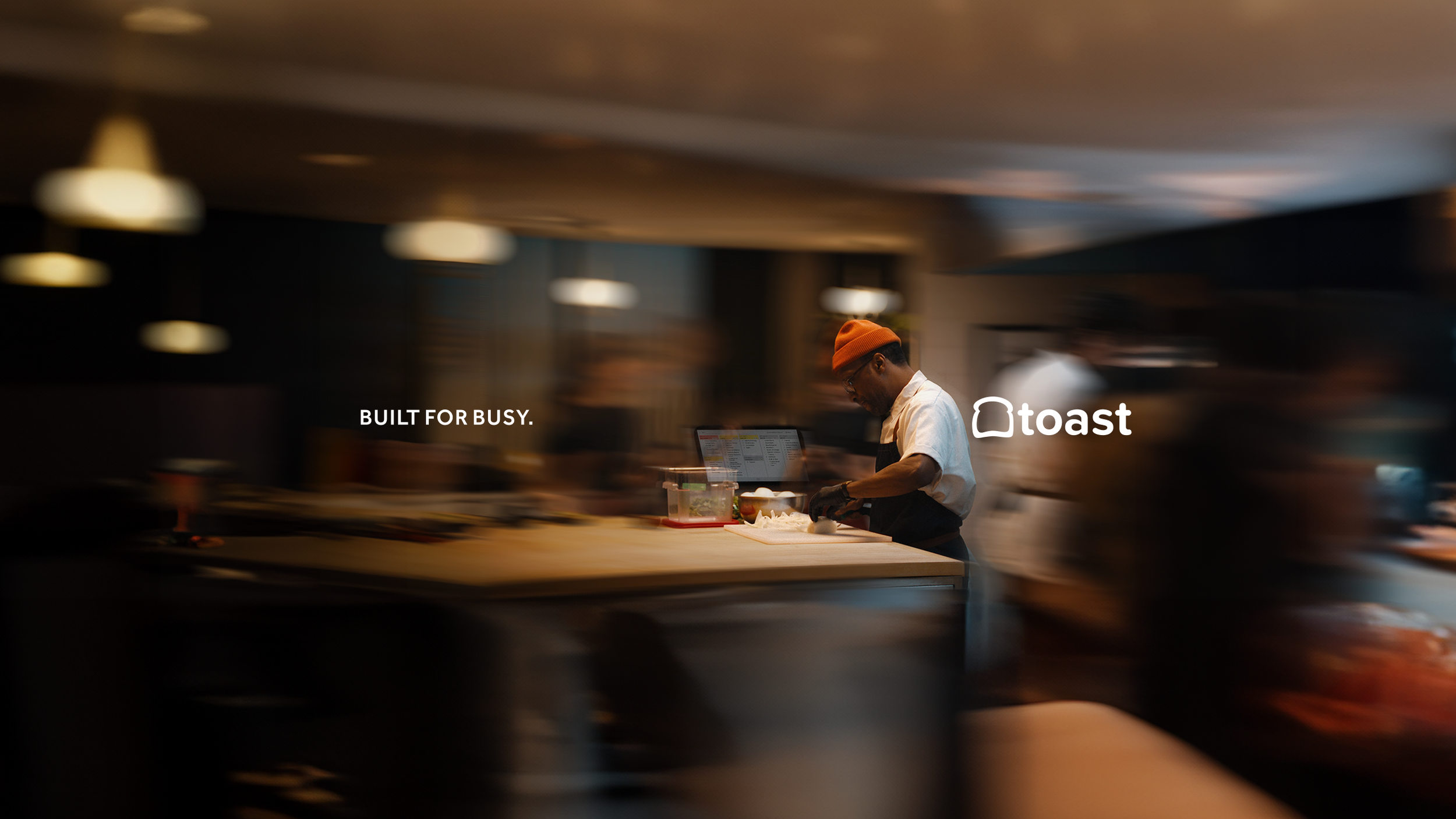
The hero brand film: directed by Tim Godsall, made in partnership with Arnold Worldwide
The Activation
Windows to Success
The brief, stripped down, was: don't tell operators Toast is built for busy. Prove it.
The idea that became the campaign centerpiece was Windows to Success. Eight of New York City's busiest Toast restaurant customers, front windows wrapped in campaign graphics, placed in some of the city's most trafficked locations. Every dollar that would have gone to a traditional outdoor media buy went to the staff of each participating business instead. Eight restaurants. Eight crews. Ten thousand dollars each, going to the people who actually make busy happen.
What made it more than a visual stunt was the data on each window. Daily Provisions is on the list because it serves 500 bacon, egg, and cheeses a morning, not because it's a well-regarded restaurant. That number is the ad. The window just gives it somewhere to live.
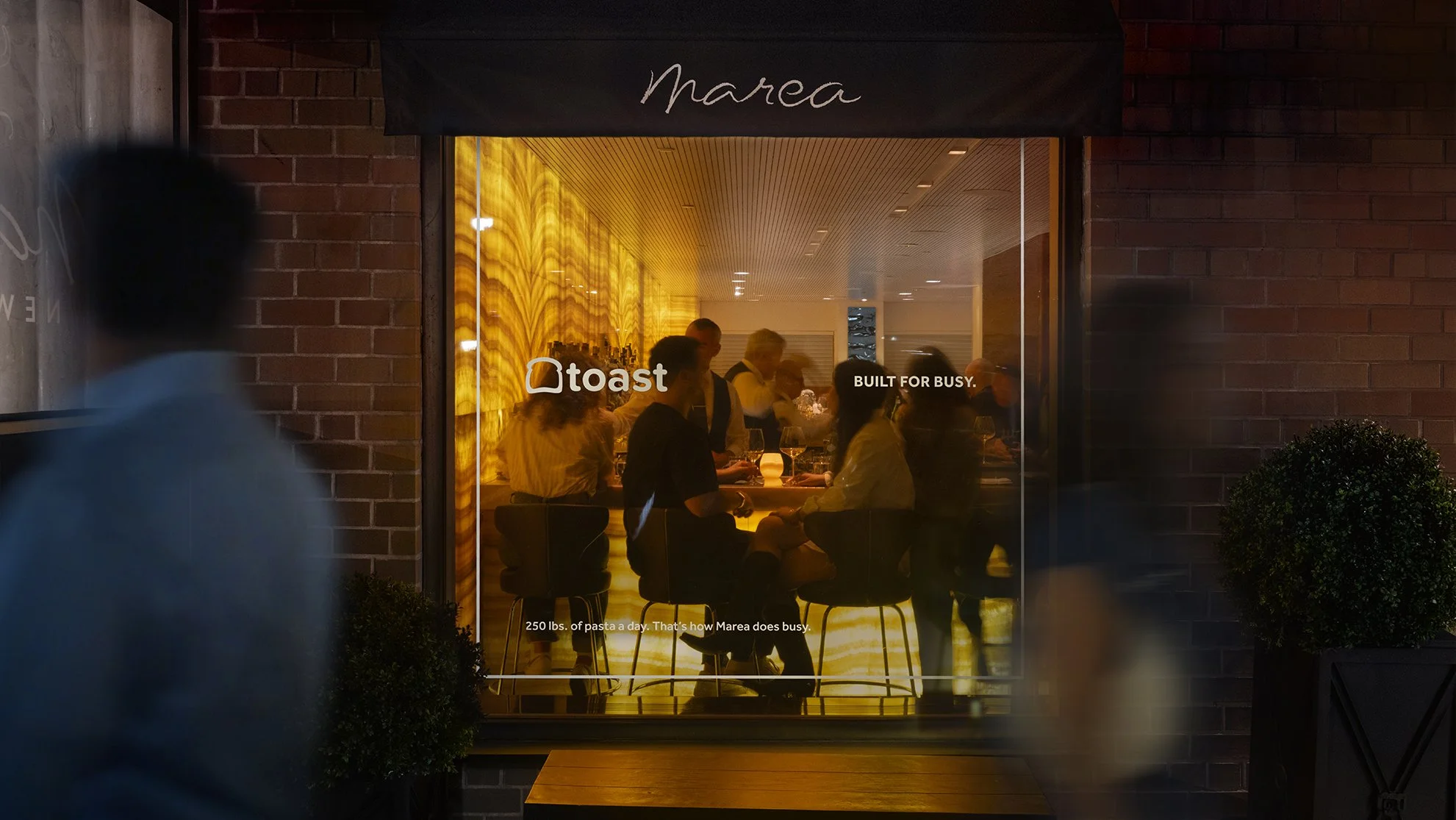
Marea: 250 lbs. of pasta a day. That's how Marea does busy.
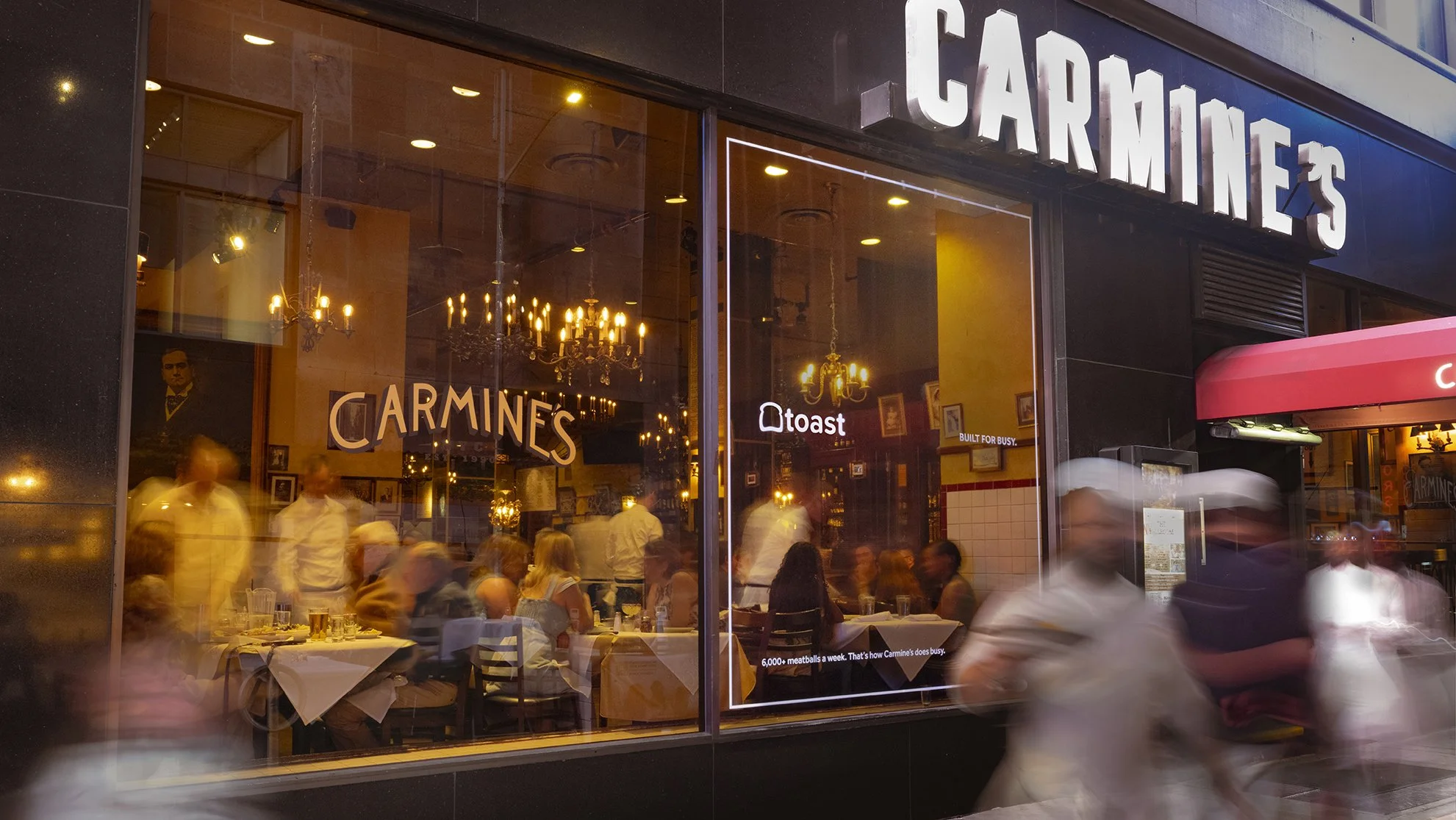
Carmine's: 6,000+ meatballs a week. That's how Carmine's does busy.
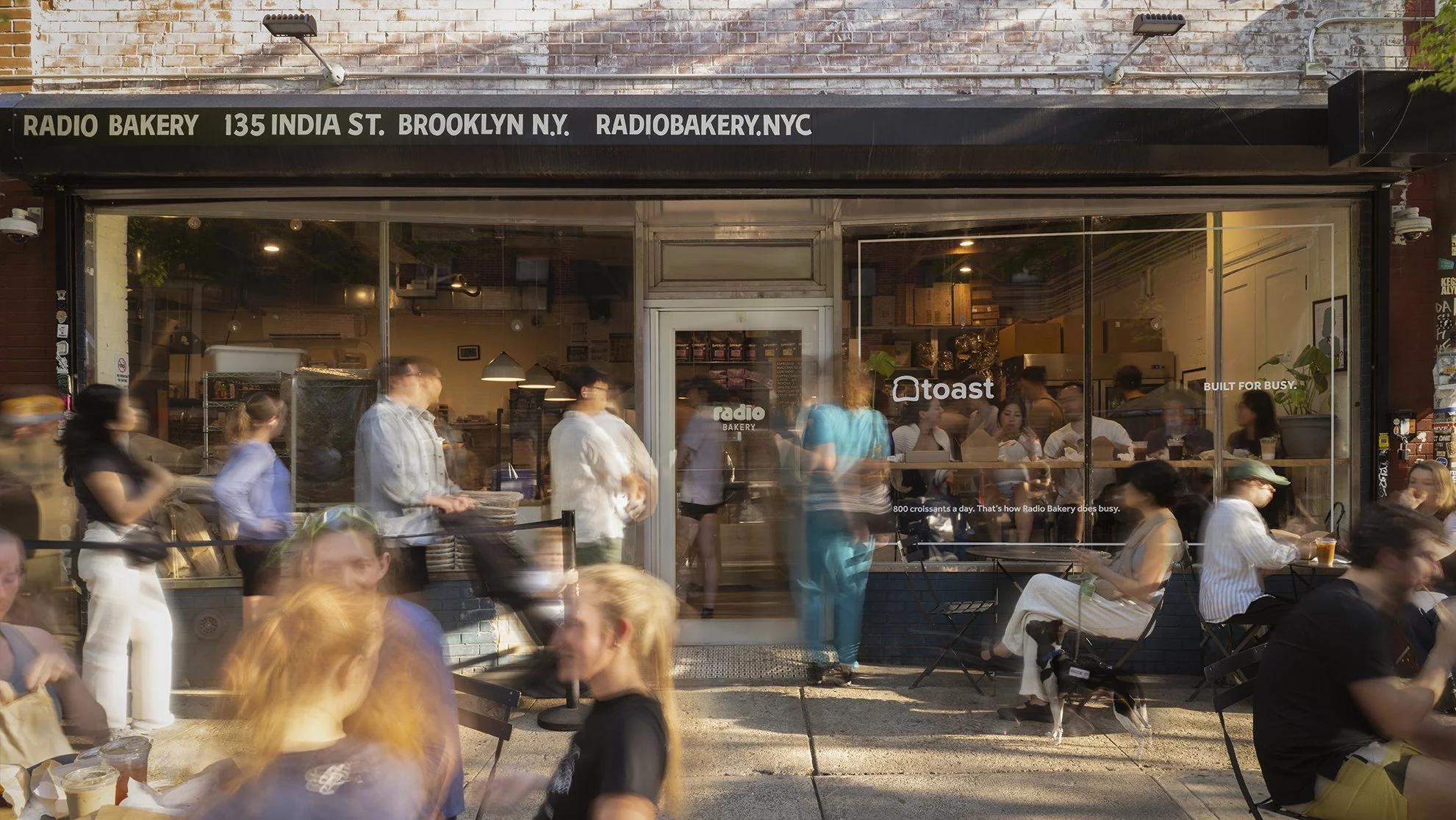
Radio Bakery: 800 croissants a day
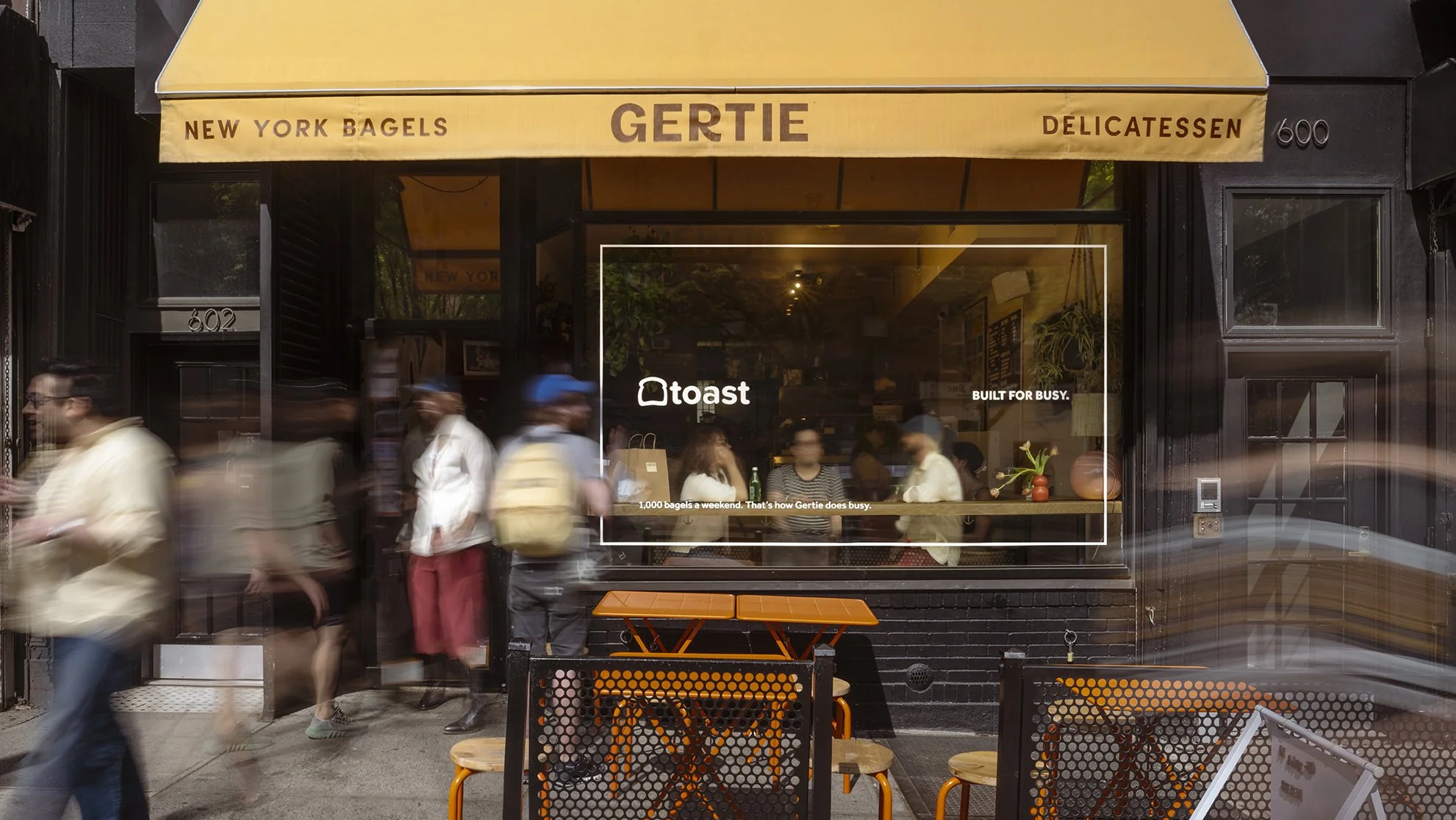
Gertie: 1,000 bagels a weekend
The Launch
April 16, 2026
The campaign went live across every channel simultaneously: paid media, organic social, the homepage, internal communications, and the Times Square billboard, a free placement Toast earned through its NYSE listing that turned into the launch's most visible moment.
Over 70 Toasters gathered in Times Square that day. Three influencers, each chosen for genuine credibility in the restaurant world rather than follower counts, captured content across all eight Windows to Success locations. By end of day, more than 100 Toasters had shared the launch on their personal channels, including 15 executives.
The internal mobilization had started months earlier. By the time the campaign went public, 91% of Toasters surveyed already understood the brand story. The launch day wasn't an announcement, it was a release valve.
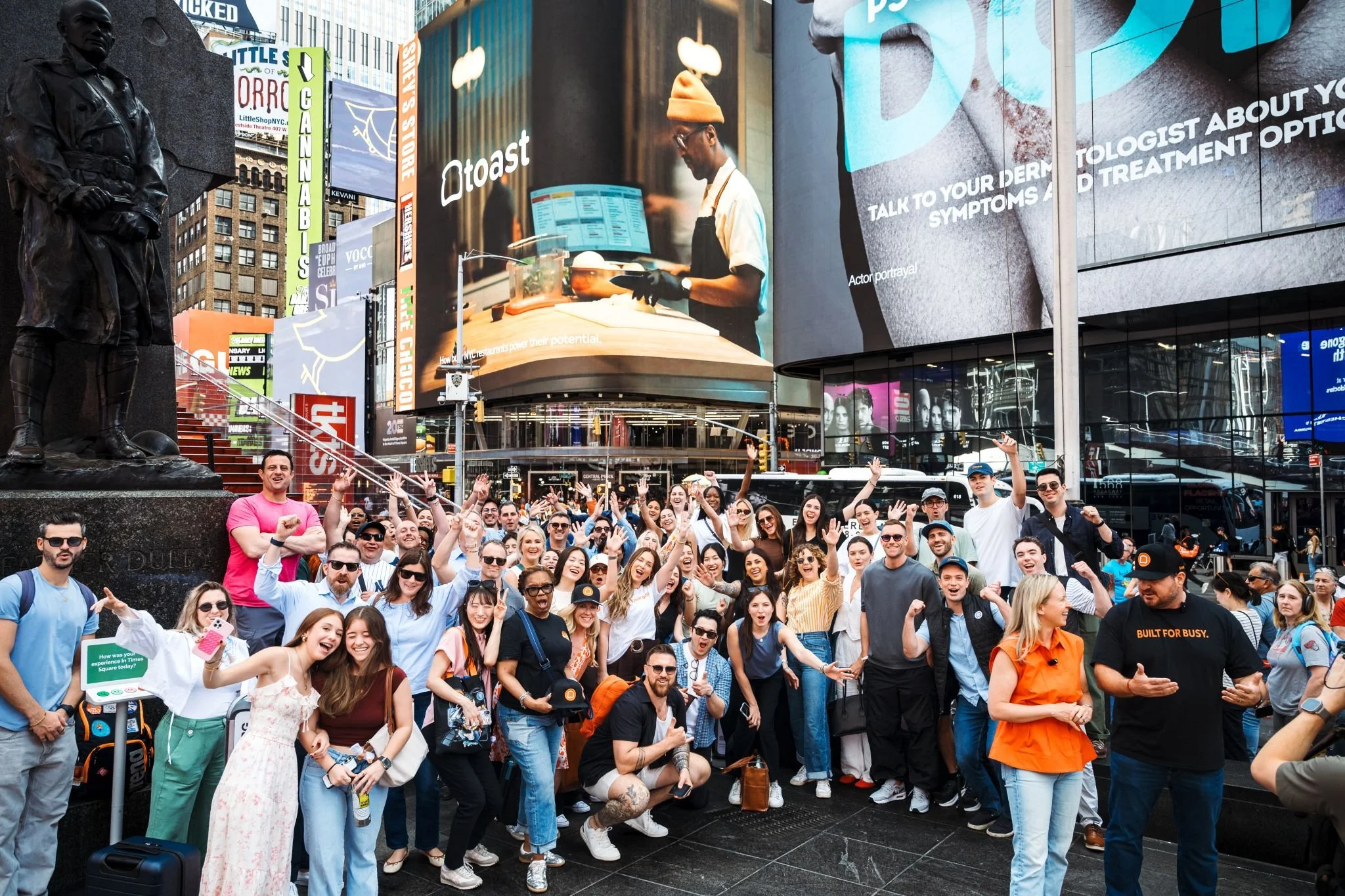
Launch day, Times Square: 70+ Toasters at the billboard
The Work
The films
The hero film established the emotional register of the platform: cinematic, operator-centric, built around the specific texture of a busy service. From that foundation, a suite of shorter cuts was developed for paid media across YouTube, Meta, and a new podcast channel that launched alongside the campaign.
Media allocation leaned on YouTube for reach and efficiency, with Meta added to the brand mix for the first time based on prior campaign results. An 8-week podcast pilot ran alongside to benchmark a new channel for future campaigns. The media decisions and the creative were built for each other.
Paid :30, YouTube / Meta
Paid :15, pre-roll
Results
The launch
Built For Busy launched across every channel in April 2026. The first two weeks put up numbers strong enough to prove the platform works.
In its first week, the campaign generated 113 million impressions, more than half of what Toast's prior national campaign reached over a full 30 days. Meta CTR came in at 2.67%, above benchmark, and branded search reached a new high. The launch moved business metrics, not just awareness.
113M
Impressions in week one
1.9M
Paid clicks to toasttab.com
7.2%
Organic social engagement vs. 5% industry benchmark
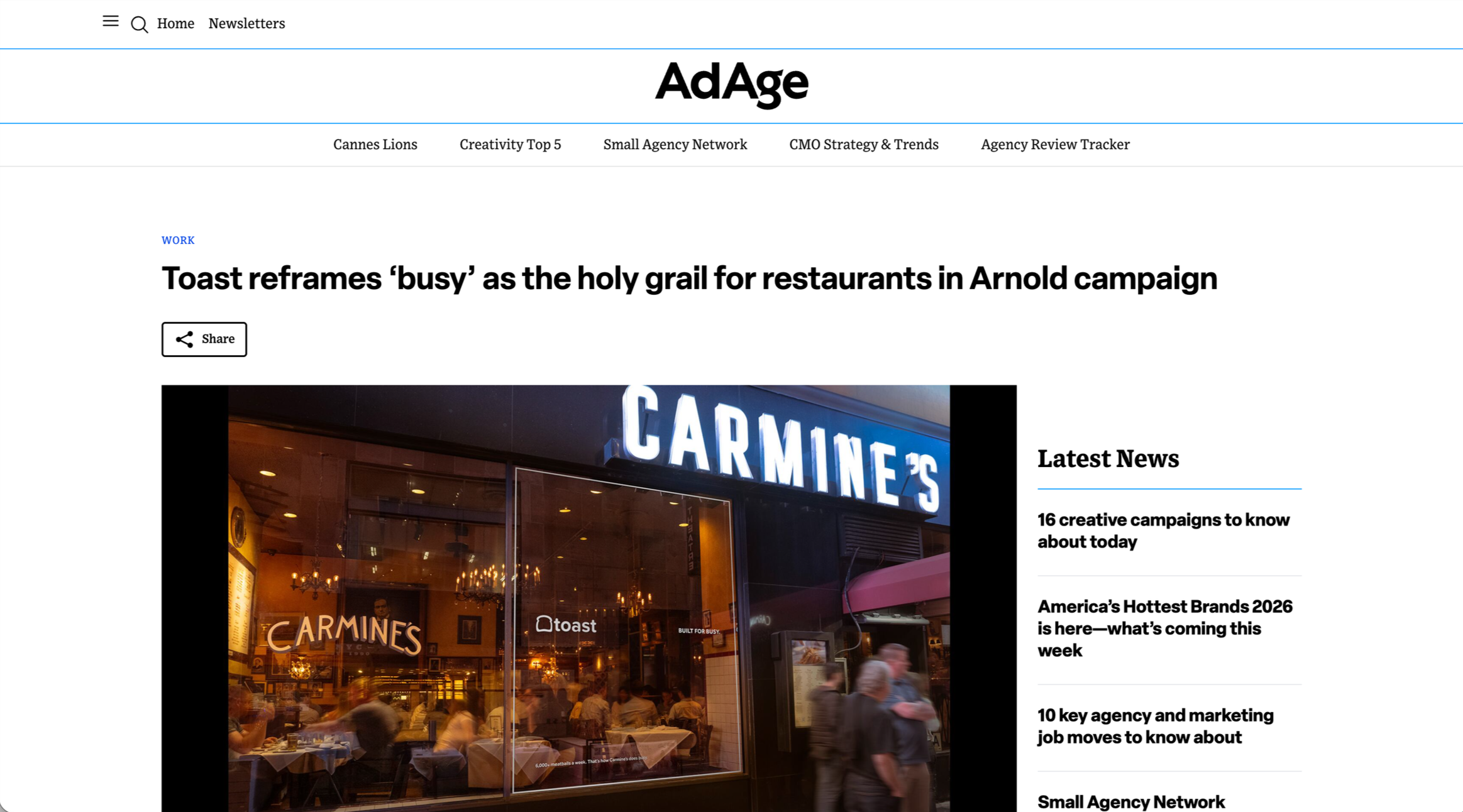
Ad Age: earned media placement, launch week
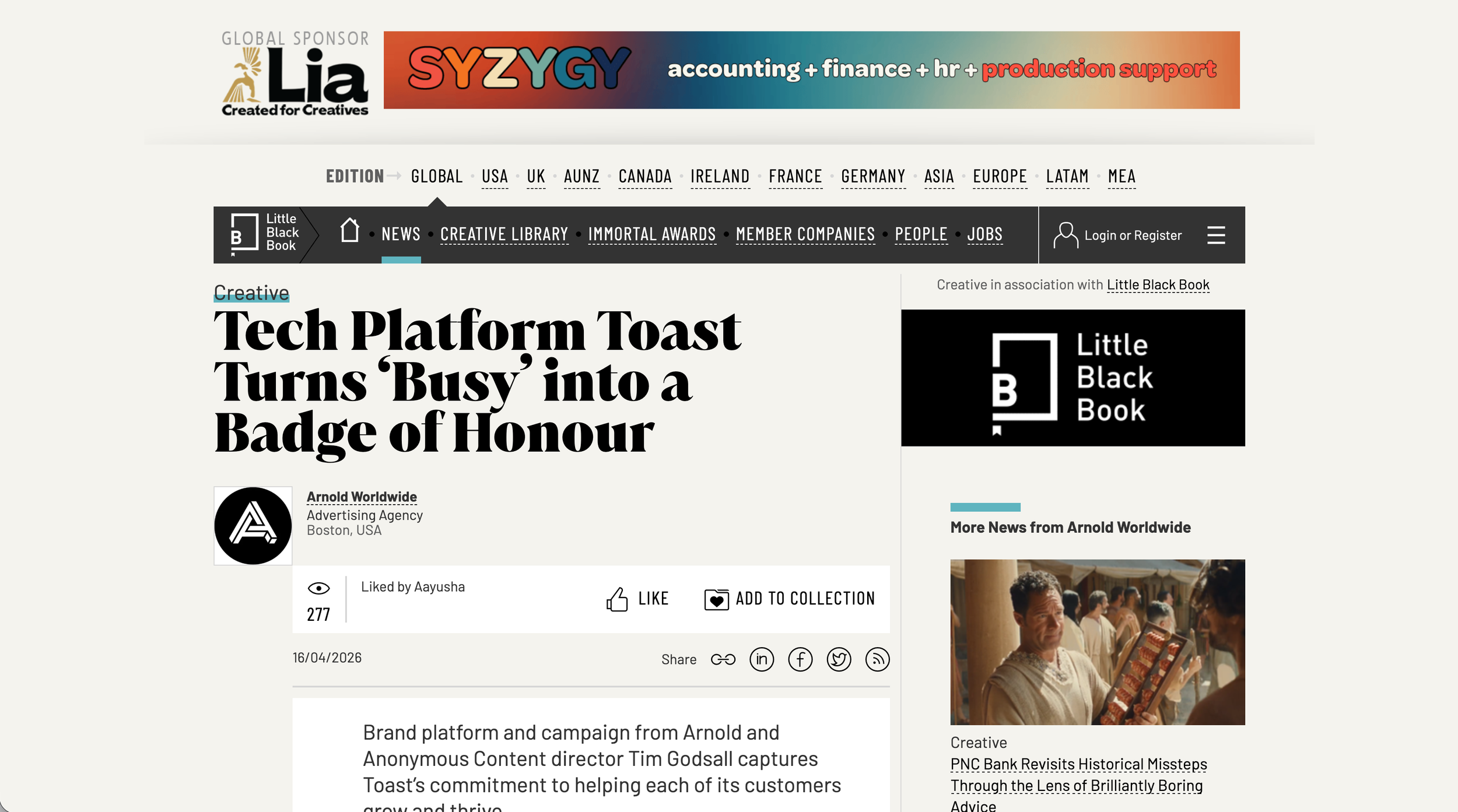
Little Black Book: earned media placement, launch week
What This is About
The right platform is the one the whole company can carry
The most fragile brand work is the kind that only lives in the creative department. If the platform requires translation before anyone else can use it, it has a ceiling.
Built For Busy was designed to travel. Sales could use it. Product could use it. Customer success could use it. Operators could say it to each other and know exactly what it meant. That's not a small thing at a company with 5,000 employees. When 91% of those people already understand the brand story before it goes public, launch day becomes a release valve, not an announcement.
The billboard and the film are what people saw. What made them land was two years of strategic work that made three words feel like they'd always been true. Brand at this scale is a long game.